
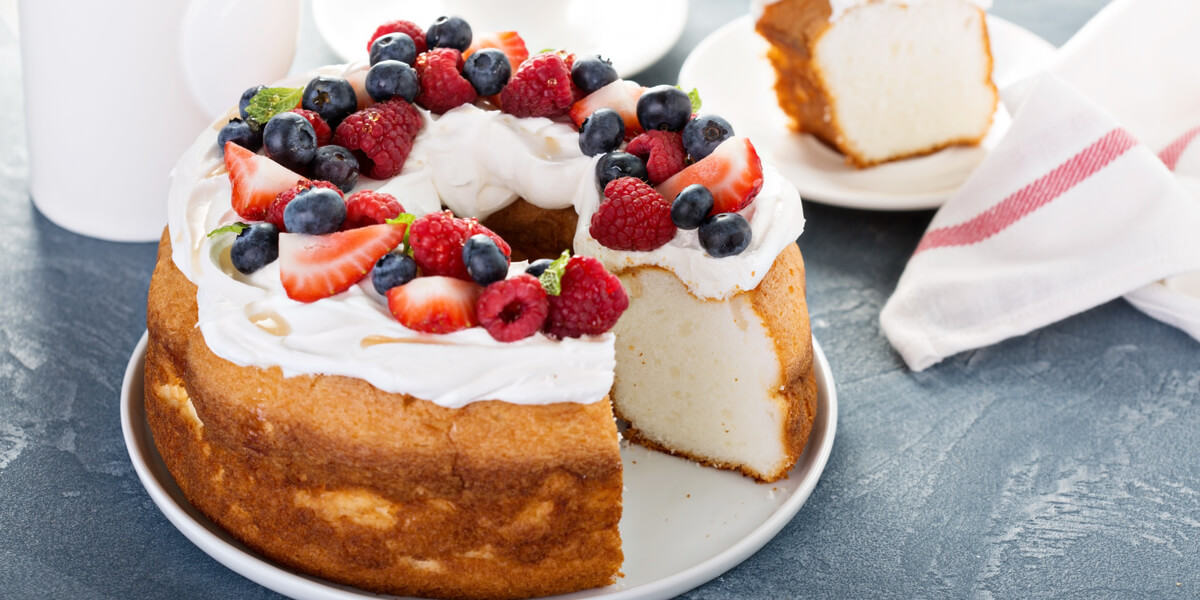
Timeless Angel Food Cake is one of those desserts that proves simplicity can be extraordinary. Its tall, cloud-like structure and delicate crumb make it look impressive, yet the ingredient list is surprisingly short. I bake this cake when I want something light, airy, and elegant, especially after a rich meal when a heavy dessert would feel overwhelming.
This cake relies almost entirely on properly whipped egg whites for structure and lift. No butter, no oil, and no heavy frostings are required to make it shine. With careful technique and patience, you can create a beautifully risen cake with a soft, springy texture and subtle sweetness that pairs perfectly with fresh fruit and whipped cream.
Everything you need to know is laid out step by step so you can bake it confidently from start to finish.
Ingredients For Angel Food Cake
Precision matters with this recipe. Because the cake depends on egg whites for its volume, accurate measurements and clean equipment are essential.
- 1 cup (120 g) cake flour
- 1 1/2 cups (300 g) granulated sugar, divided
- 12 large egg whites, room temperature
- 1 1/2 teaspoons cream of tartar
- 1/4 teaspoon salt
- 2 teaspoons pure vanilla extract
- 1/2 teaspoon almond extract (optional but traditional)
Cake flour gives this dessert its fine, tender crumb. Granulated sugar sweetens and stabilizes the egg whites, while cream of tartar strengthens the foam and helps maintain volume.
Preparing The Pan And Oven
I preheat the oven to 350°F (175°C). Angel food cake must be baked in an ungreased 10-inch tube pan with a removable bottom. The ungreased surface allows the batter to cling to the sides as it rises, which helps create height.
I never grease or line the pan. Any added fat would prevent the batter from gripping the sides and could cause the cake to collapse.
Sifting The Flour And Sugar
In a bowl, I sift the cake flour together with half of the granulated sugar. Sifting aerates the flour and ensures there are no lumps. I repeat the sifting process at least once more to make the mixture extremely light.
This step contributes to the cake’s delicate texture. Fine, evenly distributed dry ingredients blend more smoothly into the whipped egg whites later.
Whipping The Egg Whites
I place the room temperature egg whites into a large, completely clean mixing bowl. Even a trace of grease can prevent proper whipping, so I make sure the bowl and beaters are spotless.
I begin beating the egg whites on medium speed until they become foamy. Then I add the cream of tartar and salt. The mixture gradually turns white and increases in volume.
Once soft peaks form, I slowly add the remaining sugar, one tablespoon at a time. I continue beating until stiff, glossy peaks form. The peaks should stand tall but still look smooth, not dry or clumpy.
Overbeating can cause the egg whites to become grainy and collapse, so I stop as soon as stiff peaks are reached.
Adding The Flavor Extracts
I gently beat in the vanilla extract and almond extract, if using. The extracts add subtle depth without overpowering the light texture of the cake. I mix just enough to incorporate them evenly.
The egg white mixture should now look glossy and thick while holding its shape firmly.
Folding In The Flour Mixture
Using a fine sieve, I sift a small portion of the flour and sugar mixture over the whipped egg whites. With a large spatula, I gently fold the dry ingredients into the egg whites using broad, sweeping motions.
I rotate the bowl as I fold, working carefully to avoid deflating the foam. I repeat this process in several additions until all the flour mixture is incorporated.
Patience here is critical. Gentle folding preserves the air that gives angel food cake its signature lift and airy texture.
Filling The Pan
I spoon the batter into the ungreased tube pan. Using a spatula, I smooth the top lightly and run a knife through the batter to remove any large air pockets.
The pan should be filled evenly, and the surface should look smooth but not compressed.
Baking The Cake
I place the pan on the center rack of the oven and bake for 35 to 40 minutes. The cake is done when the top is golden brown and springs back when lightly touched.
A long skewer inserted into the center should come out clean. The cake will rise dramatically in the oven, forming a tall and airy structure.
Cooling Upside Down
As soon as I remove the cake from the oven, I invert the pan. Most tube pans have small feet that allow them to rest upside down. If not, I carefully invert the center tube over the neck of a sturdy bottle.
Cooling the cake upside down prevents it from collapsing. Gravity helps maintain its height while the structure sets completely.
I allow the cake to cool in the pan for at least one hour. Rushing this step can cause shrinkage.
Removing The Cake From The Pan
Once fully cooled, I run a thin knife around the edges of the cake and the center tube to loosen it. I gently remove the outer ring of the pan and slide a knife along the bottom to release the cake from the base.
I transfer the cake to a serving plate carefully to preserve its delicate texture.
Texture And Flavor Profile
Angel food cake has a light, airy crumb that almost melts in the mouth. Its sweetness is gentle rather than overwhelming. The subtle vanilla and almond notes add warmth and complexity.
The texture is soft yet springy, with tiny, even air pockets throughout. It feels delicate but slices cleanly when handled with care.
Serving Suggestions
I often serve angel food cake with freshly whipped cream and seasonal berries. Strawberries, blueberries, and raspberries pair beautifully with its light sweetness. A drizzle of fruit sauce or a dusting of powdered sugar also works well.
For a slightly richer presentation, I sometimes add lemon curd or a simple chocolate drizzle. The cake’s neutral flavor makes it versatile without overshadowing toppings.
Storage And Make-Ahead Tips
I store angel food cake covered at room temperature for up to two days. Because it contains no fat, it can dry out if left uncovered.
The cake can be made a day in advance. I avoid refrigerating it unless topped with cream or fruit, as refrigeration can dry out the crumb.
Troubleshooting Common Issues
If the cake collapses, the egg whites may not have been whipped properly or may have been overfolded. Maintaining air in the batter is essential.
If the texture turns out rubbery, overbeating the egg whites could be the cause. Beating just until stiff peaks form prevents this problem.
If the cake sticks to the pan, it may not have cooled completely before removal. Allowing full cooling upside down makes a significant difference.
Final Thoughts
Timeless Angel Food Cake remains a favorite because of its simplicity and elegance. With just a handful of ingredients and careful technique, you can create a dessert that looks impressive and tastes wonderfully light. Its airy structure and subtle sweetness make it perfect for countless occasions.
Baking this cake from scratch gives you a deeper appreciation for how powerful egg whites can be in the kitchen. Once you master the folding and whipping process, you will find yourself returning to this recipe again and again. Each slice feels soft, delicate, and satisfying without ever feeling heavy, which is exactly what makes it timeless.