
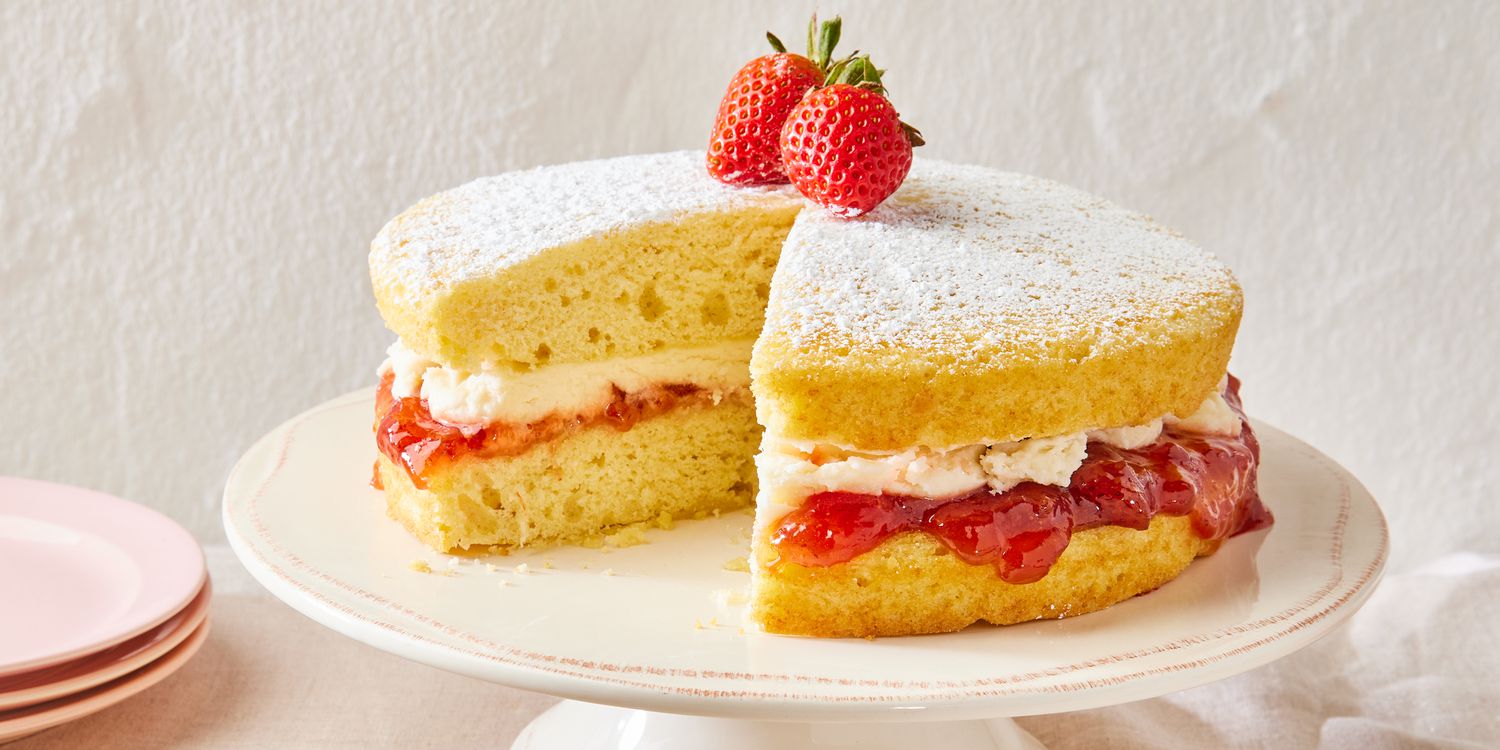
Classic Victoria Sponge Cake is one of those timeless bakes that proves simplicity can be elegant. Two tender layers of buttery sponge sandwiched with jam and softly whipped cream create a cake that feels refined yet comforting. I bake this cake when I want something light, balanced, and beautifully traditional, whether for afternoon tea or a small celebration at home.
This recipe stays true to its roots with equal parts butter, sugar, eggs, and flour forming the base. The texture is delicate but sturdy enough to hold a generous filling without collapsing. Once you master the proper creaming method and baking time, you will have a sponge that rises evenly and slices cleanly every time.
Everything is clearly explained below so you can bake it confidently from start to finish.
Ingredients For The Sponge Layers
Precision matters in a sponge cake, so I weigh my ingredients carefully. Room temperature butter and eggs are essential for smooth mixing.
- 1 cup (225 g) unsalted butter, softened
- 1 cup (225 g) granulated sugar
- 4 large eggs, room temperature
- 2 cups (225 g) self-rising flour, sifted
- 1 teaspoon baking powder
- 2 tablespoons whole milk
- 1 teaspoon pure vanilla extract
Self-rising flour gives the sponge a consistent rise, while a small amount of milk ensures a soft texture.
Ingredients For The Filling
The traditional filling is simple and fresh.
- 1/2 cup (150 g) strawberry or raspberry jam
- 1 cup (240 ml) heavy whipping cream, cold
- 2 tablespoons powdered sugar
- 1/2 teaspoon vanilla extract
- Powdered sugar for dusting
The jam should be good quality and slightly tart to balance the sweetness of the cake.
Preparing The Pans And Oven
I preheat the oven to 350°F (175°C). I grease two 8-inch round cake pans and line the bottoms with parchment paper.
Proper preparation ensures the sponge releases cleanly. Sponge cakes are delicate, so careful handling prevents tearing.
Creaming Butter And Sugar
In a large mixing bowl, I beat the softened butter until smooth and creamy. Gradually, I add the sugar and continue beating for four to five minutes.
The mixture becomes pale and fluffy, which means enough air has been incorporated. This step creates the light structure that defines a good Victoria sponge.
Adding Eggs And Vanilla
I add the eggs one at a time, beating well after each addition. If the mixture begins to look slightly curdled, I add a tablespoon of the sifted flour to bring it back together.
Once the eggs are fully incorporated, I mix in the vanilla extract. The batter should look smooth and airy.
Folding In The Flour
I sift the self-rising flour and baking powder together to ensure even distribution. Using a spatula, I gently fold the flour into the butter mixture in two additions.
I add the milk during the final fold to loosen the batter slightly. The mixture should be thick but drop easily from the spoon.
Overmixing can deflate the air incorporated earlier, so I fold carefully until just combined.
Dividing And Baking The Batter
I divide the batter evenly between the prepared pans, smoothing the tops gently with a spatula.
The cakes bake for 20 to 25 minutes. I check for doneness by pressing lightly on the center. If it springs back and a toothpick inserted into the middle comes out clean, they are ready.
I allow the cakes to cool in the pans for 10 minutes before turning them out onto wire racks to cool completely.
Preparing The Whipped Cream
While the cakes cool, I whip the heavy cream with powdered sugar and vanilla extract until soft peaks form.
The cream should be firm enough to hold its shape but still smooth and light. Overwhipping can cause it to become grainy, so I stop as soon as soft peaks form.
Assembling The Victoria Sponge
Once the cake layers are completely cool, I place one layer on a serving plate. I spread the jam evenly across the surface, leaving a small border around the edge.
Next, I spoon or pipe the whipped cream over the jam. I gently place the second sponge layer on top and press lightly to secure it.
The filling should peek slightly at the edges without spilling out excessively.
Finishing Touches
I dust the top of the cake lightly with powdered sugar for a classic finish. The simplicity of this decoration highlights the elegance of the sponge itself.
For a slightly modern touch, I sometimes add a few fresh berries on top, though the traditional version is beautifully understated.
Texture And Flavor Profile
Classic Victoria Sponge Cake has a light, tender crumb with a delicate buttery flavor. The jam adds sweetness and fruitiness, while the whipped cream provides softness and balance.
Each bite feels airy yet satisfying. The combination of textures creates a cake that feels indulgent without being heavy.
Storage And Serving Tips
I store the assembled cake in the refrigerator because of the whipped cream. It is best enjoyed the same day, as the cream can soften the sponge over time.
Before serving, I allow the cake to sit at room temperature for about 20 minutes. This enhances the flavor and softens the texture slightly.
For clean slices, I use a sharp knife and wipe it between cuts.
Troubleshooting Common Issues
If the sponge layers turn out dense, the butter and sugar may not have been creamed long enough. Proper aeration is crucial.
If the cake sinks in the center, it may have been underbaked or the oven door opened too early.
If the cream begins to weep, it may have been overwhipped or stored too long before serving.
Final Thoughts
Classic Victoria Sponge Cake remains beloved for its simplicity and balance. The tender sponge, bright jam, and soft whipped cream come together in a dessert that feels timeless and refined. It requires attention to detail but relies on straightforward techniques that any home baker can master.
Baking this cake from scratch allows you to appreciate the beauty of traditional methods and simple ingredients. With careful mixing and proper baking, you can create a Victoria sponge that looks elegant and tastes wonderfully light. Each slice offers a perfect balance of sweetness, softness, and fresh flavor that never goes out of style.