
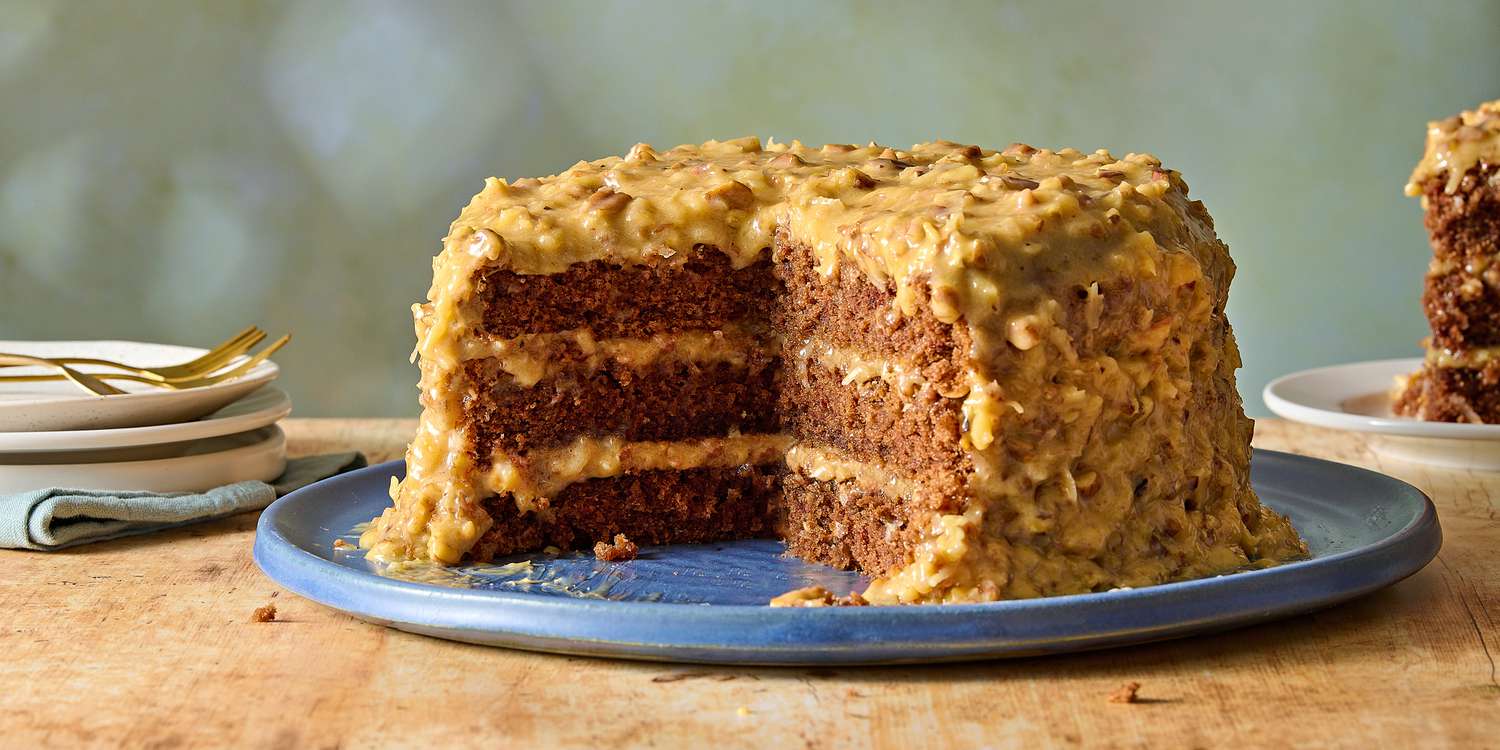
Traditional German Chocolate Cake is rich, layered, and unapologetically indulgent. The tender chocolate cake layers are balanced by a thick coconut-pecan filling that feels almost caramel-like, and the entire dessert comes together with a smooth chocolate frosting that frames everything beautifully. I bake this cake when I want something that feels celebratory, nostalgic, and deeply satisfying in both texture and flavor.
This cake is made completely from scratch, including the signature coconut-pecan filling. Each step builds flavor and structure, from melting the chocolate properly to cooking the filling until thick and glossy. If you measure carefully and follow the method closely, you will end up with a bakery-quality cake that slices cleanly and tastes even better the next day.
Everything you need is laid out clearly below so you can move from ingredients to finished cake without confusion.
Ingredients For Traditional German Chocolate Cake
The key to this cake is balance. The chocolate layers are moist but not overly sweet, allowing the coconut-pecan filling to shine without becoming overwhelming.
For the chocolate cake layers:
- 4 ounces (115 g) sweet baking chocolate, chopped
- 1/2 cup (120 ml) boiling water
- 2 1/4 cups (280 g) all-purpose flour
- 1 teaspoon baking soda
- 1/2 teaspoon salt
- 1 cup (225 g) unsalted butter, softened
- 2 cups (400 g) granulated sugar
- 4 large eggs, separated
- 1 teaspoon vanilla extract
- 1 cup (240 ml) buttermilk, room temperature
For the coconut-pecan filling:
- 1 cup (240 ml) evaporated milk
- 1 cup (200 g) granulated sugar
- 3 large egg yolks
- 1/2 cup (115 g) unsalted butter
- 1 teaspoon vanilla extract
- 1 1/3 cups (120 g) sweetened shredded coconut
- 1 cup (120 g) chopped pecans
For the chocolate frosting:
- 1/2 cup (115 g) unsalted butter, softened
- 2/3 cup (55 g) unsweetened cocoa powder
- 3 cups (360 g) powdered sugar
- 1/3 cup (80 ml) milk
- 1 teaspoon vanilla extract
Room temperature butter, eggs, and buttermilk ensure smooth mixing and proper emulsification.
Equipment Needed
I bake this cake in three 8-inch round cake pans for classic stacked layers. You will also need parchment paper, a stand mixer or hand mixer, mixing bowls, a whisk, a rubber spatula, and a heavy-bottomed saucepan for the filling.
Before starting, I preheat the oven to 350°F (175°C). I grease the cake pans thoroughly, line the bottoms with parchment paper, and lightly flour the sides. Proper preparation prevents sticking and ensures clean release.
Melting The Chocolate
I begin by placing the chopped sweet baking chocolate in a heatproof bowl. I pour the boiling water over it and let it sit for a few minutes. Then I stir gently until the chocolate melts completely and becomes smooth.
I set the melted chocolate aside to cool slightly. Adding it too hot to the batter can affect the texture, so I allow it to become warm rather than steaming.
Preparing The Dry Ingredients
In a medium bowl, I whisk together the flour, baking soda, and salt. Even distribution of the leavening agent ensures the cake rises evenly. I set this mixture aside while preparing the butter and sugar.
Creaming Butter And Sugar
In the mixer bowl, I beat the softened butter on medium speed until smooth. Gradually, I add the granulated sugar and continue beating for four to five minutes until the mixture becomes pale and fluffy.
This stage incorporates air into the batter, which helps create a tender crumb. I scrape down the sides of the bowl halfway through to ensure even mixing.
Adding Egg Yolks And Chocolate
I add the egg yolks one at a time, beating well after each addition. The batter becomes thicker and richer with each yolk. Once incorporated, I mix in the vanilla extract.
Next, I pour in the melted chocolate and beat until fully combined. The batter takes on a deep chocolate color and smooth consistency.
Alternating Flour And Buttermilk
With the mixer on low speed, I add the flour mixture in three additions, alternating with the buttermilk in two additions. I begin and end with the flour. Mixing gently at this stage prevents overdevelopment of gluten.
I stop mixing as soon as the flour disappears into the batter. Overmixing can lead to a tougher cake texture.
Beating The Egg Whites
In a clean bowl, I beat the egg whites until stiff peaks form. This step adds lightness to the cake layers. The peaks should stand upright when the beaters are lifted.
I gently fold the beaten egg whites into the batter in three additions. Using a spatula, I fold carefully to avoid deflating the mixture. The batter becomes lighter and slightly airy.
Filling The Pans And Baking
I divide the batter evenly among the prepared pans. I smooth the tops gently and tap the pans lightly on the counter to release any air bubbles.
The cakes bake for about 25 to 30 minutes. I test for doneness by inserting a toothpick into the center. If it comes out clean or with a few moist crumbs, the layers are ready.
Once baked, I allow the cakes to cool in the pans for 10 minutes before transferring them to a cooling rack. I let them cool completely before assembling.
Making The Coconut-Pecan Filling
In a heavy saucepan, I combine the evaporated milk, sugar, egg yolks, and butter. I cook the mixture over medium heat, stirring constantly to prevent scorching. After about 10 to 12 minutes, the mixture thickens and coats the back of a spoon.
I remove the saucepan from the heat and stir in the vanilla extract, shredded coconut, and chopped pecans. The filling should be thick, glossy, and spreadable. I allow it to cool completely before using.
As it cools, it continues to thicken into a rich, textured filling.
Preparing The Chocolate Frosting
In a mixing bowl, I beat the softened butter until smooth. I add the cocoa powder and mix until fully combined. Gradually, I add the powdered sugar, alternating with milk to achieve a smooth consistency.
I mix in the vanilla extract and beat until fluffy. The frosting should be spreadable but not runny. If it feels too thick, I add a small splash of milk.
Assembling The Cake
I place one cake layer on a serving plate. I spread a generous layer of coconut-pecan filling on top, reaching close to the edges. I repeat with the second layer.
After placing the third layer on top, I frost only the sides of the cake with chocolate frosting. Traditional German Chocolate Cake typically leaves the top exposed with the coconut-pecan filling visible.
I spread the remaining filling evenly across the top layer. The contrast between the dark frosting and the golden coconut filling creates a beautiful finish.
Texture And Flavor Profile
This cake delivers layers of flavor and texture. The chocolate cake is moist and tender with a subtle sweetness. The coconut-pecan filling adds chewiness, crunch, and caramel-like richness.
The chocolate frosting balances everything with a smooth cocoa finish. Each bite combines soft cake, creamy filling, and nutty texture in perfect harmony.
Storage And Shelf Life
I store the assembled cake covered in the refrigerator because of the egg-based filling. It stays fresh for up to four days. Before serving, I allow it to sit at room temperature for about 30 minutes to soften.
The cake layers can be baked a day in advance and wrapped tightly. The filling can also be made ahead and refrigerated until ready to use.
Troubleshooting Tips
If the cake layers turn out dense, the egg whites may not have been folded gently enough. Proper folding maintains lightness. Expired baking soda can also affect rise.
If the filling is too thin, it likely needs more cooking time. It should thicken significantly before removing from heat.
If the frosting becomes too soft, chilling it briefly helps restore spreadability.
Serving Suggestions
I slice this cake with a sharp knife wiped clean between cuts for neat presentation. It pairs beautifully with coffee or a glass of cold milk. The rich flavors make it ideal for birthdays, holidays, and special gatherings.
Each slice showcases the layered structure and textured filling, making it both visually appealing and deeply satisfying.
Final Thoughts
Traditional German Chocolate Cake remains a classic because it delivers complexity without unnecessary complication. The moist chocolate layers, rich coconut-pecan filling, and smooth frosting come together in a dessert that feels indulgent and timeless. With careful preparation and attention to detail, you can bake a cake that rivals any bakery version.
Once you cut into it and taste the balance of chocolate, coconut, and pecans, you will understand why this cake has endured for generations. It is rich, celebratory, and absolutely worth the effort.