
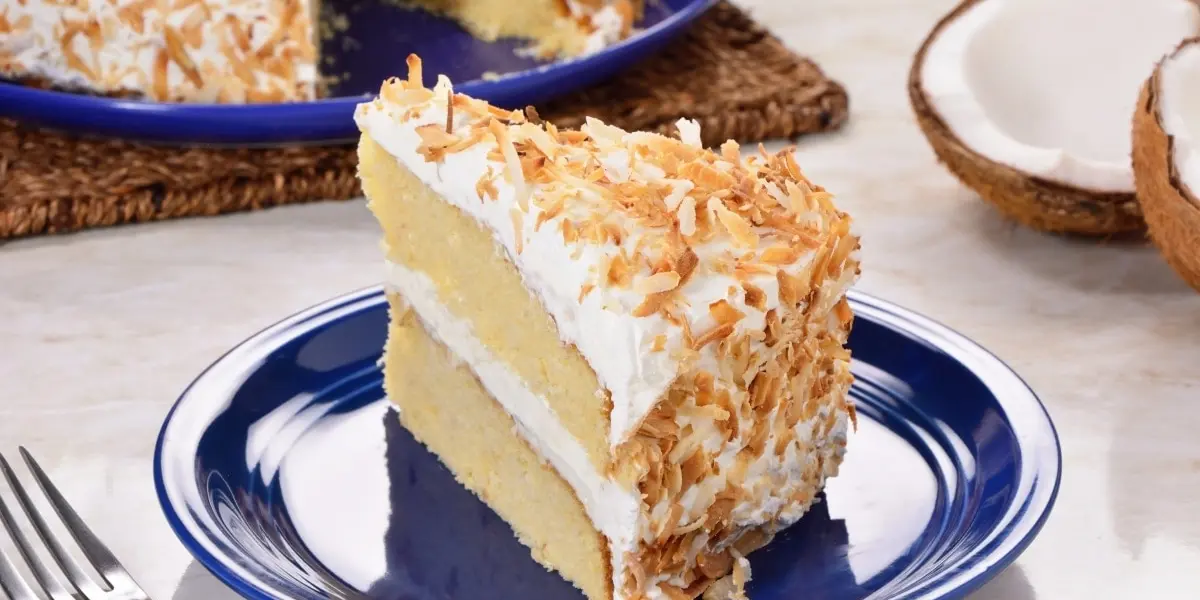
Vegan vanilla coconut cake delivers soft, fragrant layers infused with creamy coconut and pure vanilla in every bite. I bake this cake whenever I want a plant-based dessert that feels celebratory yet comforting at the same time. The crumb turns out tender and moist, the flavor is balanced without being overly sweet, and the coconut adds a delicate tropical note that pairs beautifully with vanilla.
This recipe is completely dairy-free and egg-free, yet it rises beautifully and slices cleanly. I rely on a simple combination of plant-based milk, oil, and a touch of acidity to create structure and lightness. If you follow each step carefully, you will have a cake that looks elegant, tastes rich, and requires no complicated substitutions or specialty ingredients.
Below, I walk through the exact ingredient list, detailed preparation steps, baking instructions, and frosting method. You can simply read through and bake with confidence.
Ingredients For The Vegan Vanilla Coconut Cake
Accurate measurements make all the difference in vegan baking. I measure carefully and recommend using standard measuring cups leveled off with a knife for precision.
For the cake layers:
3 cups all-purpose flour
1 1/2 cups granulated sugar
1 tablespoon baking powder
1/2 teaspoon baking soda
1/2 teaspoon salt
1 cup full-fat canned coconut milk, well shaken
1 cup unsweetened almond milk or soy milk
2/3 cup neutral oil such as sunflower or canola oil
2 tablespoons apple cider vinegar
1 tablespoon pure vanilla extract
1 teaspoon coconut extract
1 cup unsweetened shredded coconut
For the vegan coconut frosting:
1 cup vegan butter, softened
3 1/2 cups powdered sugar
3 to 5 tablespoons coconut milk
1 teaspoon vanilla extract
1/2 teaspoon coconut extract
Pinch of salt
Optional topping:
1 cup toasted shredded coconut
These ingredients create two 8-inch round cake layers. If you prefer a taller cake, you can divide the batter into three 6-inch pans instead.
Preparing The Pans And Oven
Preheat your oven to 350°F (175°C). Allow the oven to fully heat before placing the cake inside so that the leavening agents activate properly and the layers rise evenly.
Grease two 8-inch round cake pans with oil or vegan butter. Line the bottoms with parchment paper and lightly grease the parchment as well. This ensures the layers release easily without sticking, which is especially important for tender vegan cakes.
Set the prepared pans aside while you mix the batter. Having everything ready before combining wet and dry ingredients keeps the texture consistent.
Mixing The Dry Ingredients
In a large mixing bowl, add the flour, sugar, baking powder, baking soda, and salt. Whisk thoroughly until everything is evenly distributed. Proper mixing prevents uneven rising and avoids pockets of baking powder in the finished cake.
The sugar should blend smoothly into the flour mixture. If you notice lumps, break them apart with your whisk. Even distribution at this stage sets the foundation for a light and even crumb.
Stir in the shredded coconut and whisk again. This allows the coconut to disperse throughout the batter rather than clumping together later.
Combining The Wet Ingredients
In a separate bowl, pour in the coconut milk and almond milk. Whisk gently to combine them into a smooth mixture. The coconut milk adds richness, while the almond or soy milk lightens the texture.
Add the oil, apple cider vinegar, vanilla extract, and coconut extract. Whisk until everything is fully blended and smooth. The vinegar reacts with the baking soda to help create lift, replacing the role eggs would normally play.
Let the wet mixture sit for about one minute so the vinegar begins activating the baking soda once it meets the dry ingredients. This small pause helps improve the rise.
Bringing The Batter Together
Pour the wet mixture into the bowl of dry ingredients. Use a spatula or whisk to combine gently but thoroughly. Mix just until no streaks of flour remain, being careful not to overmix.
The batter should look smooth and slightly thick but still pourable. Scrape down the sides and bottom of the bowl to ensure everything is fully incorporated.
Once combined, let the batter rest for two to three minutes. This short rest allows the flour to hydrate fully and improves the overall texture.
Dividing And Baking The Cake
Evenly divide the batter between the two prepared pans. Smooth the tops with a spatula so they bake evenly.
Place the pans on the center rack of your preheated oven. Bake for 28 to 35 minutes, checking at the 28-minute mark. Insert a toothpick into the center of each cake. If it comes out clean or with a few moist crumbs, the layers are ready.
Remove the cakes from the oven and allow them to cool in the pans for 10 to 15 minutes. Then carefully run a knife around the edges and invert them onto a wire rack to cool completely.
Cooling fully before frosting is essential. Warm layers will melt the frosting and cause it to slide.
Toasting The Coconut For Topping
If you want extra texture and flavor, toast the shredded coconut. Spread it evenly on a baking sheet and bake at 325°F (160°C) for 5 to 8 minutes. Stir halfway through to prevent burning.
Watch closely because coconut browns quickly. Once golden, remove from the oven and allow it to cool completely before using.
Toasted coconut adds a slightly nutty flavor and a beautiful finish to the cake.
Preparing The Vegan Coconut Frosting
Place the softened vegan butter in a large bowl. Beat with an electric mixer until creamy and smooth. This step ensures a light and fluffy frosting.
Gradually add the powdered sugar, about one cup at a time, mixing on low speed at first. Scrape down the sides of the bowl to ensure even mixing.
Add the vanilla extract, coconut extract, and a pinch of salt. Begin adding coconut milk one tablespoon at a time until the frosting reaches a smooth, spreadable consistency. It should be thick enough to hold its shape but soft enough to spread easily.
Beat for an additional two minutes to incorporate air and create a light texture.
Assembling The Cake
Place one cake layer on a serving plate or cake stand. Spread an even layer of frosting over the top, reaching all the way to the edges.
Carefully place the second layer on top. Press gently to secure it in place. Spread frosting over the top and sides, smoothing it with an offset spatula or the back of a spoon.
Once frosted, gently press toasted coconut onto the sides and sprinkle more on top if desired. The coconut adheres easily to the frosting and adds a beautiful finish.
Texture And Flavor Profile
This vegan vanilla coconut cake has a soft, tender crumb with a subtle richness from the coconut milk. The vanilla flavor is warm and fragrant without overpowering the coconut.
The shredded coconut inside the cake adds gentle texture, while the toasted coconut on top provides a slight crunch. Each bite feels balanced and satisfying.
Unlike some vegan cakes that turn out dense or dry, this one stays moist for days thanks to the oil and coconut milk combination.
Storage And Serving Tips
Store the cake in an airtight container at room temperature for up to two days. If your kitchen is warm, refrigerate it to keep the frosting stable.
In the refrigerator, it will stay fresh for up to five days. Allow slices to sit at room temperature for about 20 minutes before serving so the texture softens and the flavors shine.
You can also freeze unfrosted layers wrapped tightly in plastic wrap for up to two months. Thaw overnight in the refrigerator before assembling.
Helpful Baking Tips
Use full-fat canned coconut milk rather than refrigerated carton coconut milk. The higher fat content contributes to moisture and flavor.
Do not overmix the batter once the wet and dry ingredients are combined. Overmixing can make the cake slightly dense.
If you want a stronger coconut flavor, add an extra half teaspoon of coconut extract. Adjust carefully, as too much can become overpowering.
Measure flour correctly by spooning it into the measuring cup and leveling it off. Scooping directly from the bag can pack too much flour into the cup.
Variations You Can Try
For a citrus twist, add one tablespoon of finely grated lime zest to the batter. The brightness complements the coconut beautifully.
You can also add a thin layer of coconut cream or vegan lemon curd between the cake layers for extra richness. This creates a slightly more indulgent dessert.
For cupcakes, divide the batter into lined muffin tins and bake for 18 to 22 minutes. The recipe yields about 24 cupcakes.
If you enjoy layered celebration cakes, double the frosting and pipe decorative swirls on top using a piping bag.
Final Thoughts
Vegan vanilla coconut cake proves that plant-based baking can be just as indulgent and satisfying as traditional recipes. The texture is soft, the flavor is balanced, and the coconut adds a delicate tropical depth that makes the cake feel special.
With simple ingredients and clear steps, you can bake this cake confidently whether you are new to vegan desserts or experienced in plant-based baking. Once you try it, this recipe will likely become a reliable favorite for birthdays, gatherings, or quiet evenings when a slice of homemade cake feels exactly right.